As autumn deepens, the national temperature and water temperature continue to drop, and the temperature difference between day and night further widens. October is not only a crucial period for the bountiful harvest of aquaculture animals, but also a "troubled autumn" for disease prevention and control.
Based on the disease monitoring data of the same period in recent years and the climatic characteristics, combined with the predictions of the National Aquatic Technology Extension Station and the agricultural and rural affairs departments of many places, the disease risks and prevention and control measures of aquaculture in October 2025 are sorted out as follows for your reference.
I. Background and Risk Points of High Incidence of Diseases in October
1. Environmental pressure has increased dramatically
The intensification of water temperature stratification and the frequent convection between the upper and lower water bodies lead to the accelerated decomposition of organic matter such as leftover feed and feces, and an increase in the concentration of harmful substances like ammonia nitrogen and nitrite, which can easily cause deterioration of water quality.
When farmed animals enter the rapid fattening stage before overwintering, the amount of feed reaches the peak of the year, increasing the burden on the liver and intestines and reducing immunity.
Frequent operations such as fishing, pond division and transportation increase mechanical damage to fish bodies, providing opportunities for pathogen invasion.
2. Key types of diseases
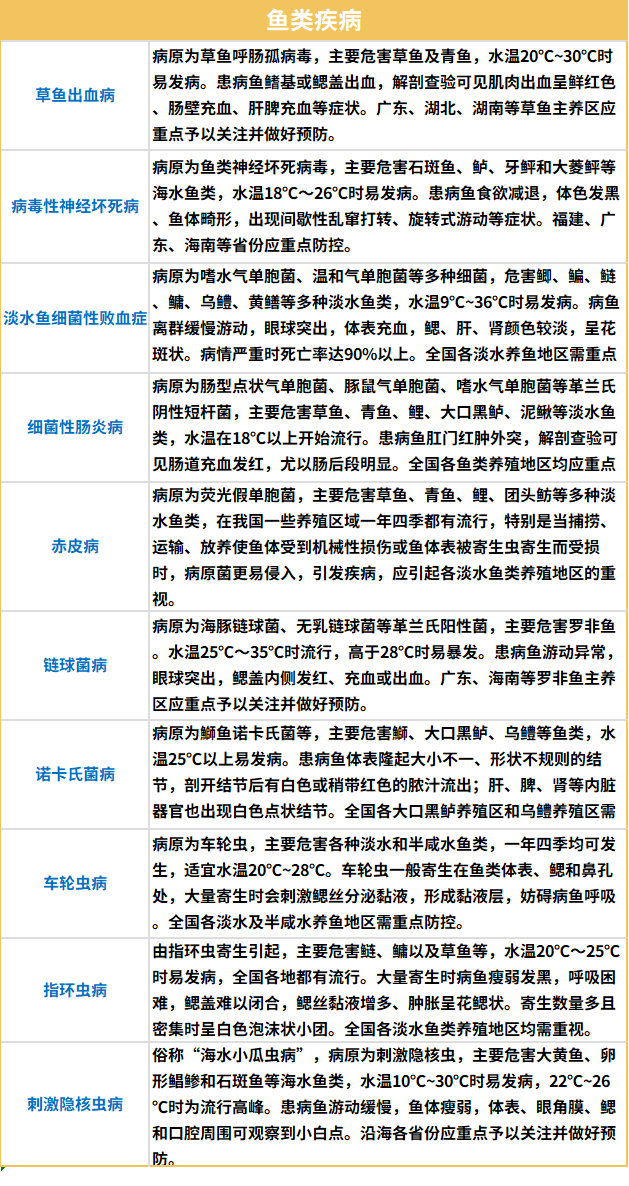
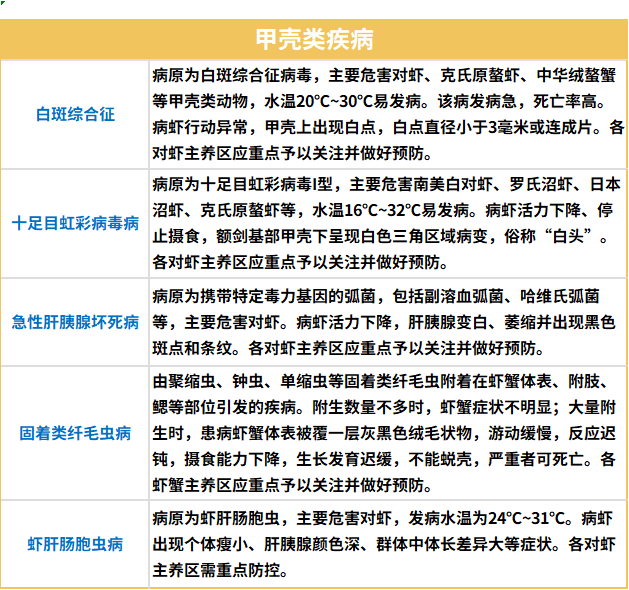
Viral diseases: grass carp hemorrhagic disease, viral neuronecrosis disease, leukoplakia syndrome, Decapod iridovirus disease, etc.
Bacterial diseases: Bacterial septicemia in freshwater fish, streptococcosis, Nocarlosis, bacterial enteritis, etc.
Parasitic diseases: Trichoplasmosis, gyrodactylosis, cryptococcosis (sea cucumber worm disease), ciliate fixation disease, etc.
Fungal disease: Water mold disease (high incidence during low-temperature periods).
Second, diseases prone to occur
Fish diseases
Crustacean diseases
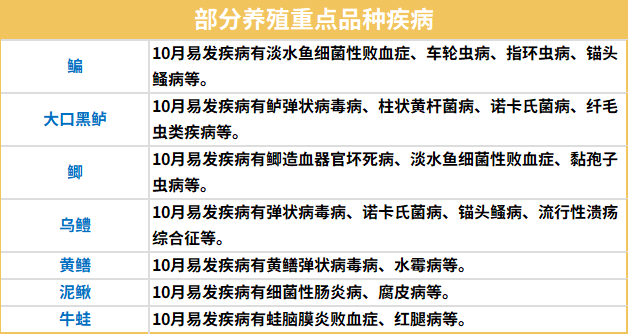
Diseases of some key species in aquaculture
Iii. Prevention and Control Suggestions
Strengthen the management of aquaculture production
Persist in daily pond patrols, test water quality indicators, and observe the activities and feeding conditions of farmed animals. Maintain a reasonable stocking density and promptly catch and market farmed animals that have reached commercial standards.
This not only can avoid the concentrated listing time and improve economic benefits, but also can reduce the load pressure on water bodies.
Water quality management
Regularly disinfect the aquaculture environment. Quicklime or chlorine-containing disinfectants can be used to disinfect the aquaculture water body. Regularly use sediment improvers or microecological preparations to improve the growth environment and keep the water quality "rich, active, tender and refreshing".
Scientific feeding
Select specialized compound feed with comprehensive nutrition and appropriately add immune enhancers such as vitamin C sodium powder. Adjust the feeding amount reasonably based on the weather, water temperature and the amount of water in the pond to avoid waste and water quality pollution.
Standardized operation
When transferring or merging ponds, operate with care to avoid mechanical damage to the farmed animals. Disinfect the net in time after pulling it to prevent secondary infection. For overwintering ponds, it is necessary to replenish water in a timely manner to raise the water level and prevent hypoxia and frost damage during the overwintering period.