As the spring temperature rises, aquaculture enters a period with a high incidence of diseases.
The National Climate Center predicts that in April 2026, the temperatures across most parts of the country will be 1-2℃ higher than the average. In the southern part of North China and the northeastern part of the Huabei region, precipitation will be 2-5% higher than usual. Such warm and humid conditions are conducive to accelerating the reproduction of pathogenic microorganisms. Coupled with factors such as increased feed intake by breeding species and heavier water load, the following disease risks and prevention measures need to be closely monitored.
I. Fish Diseases
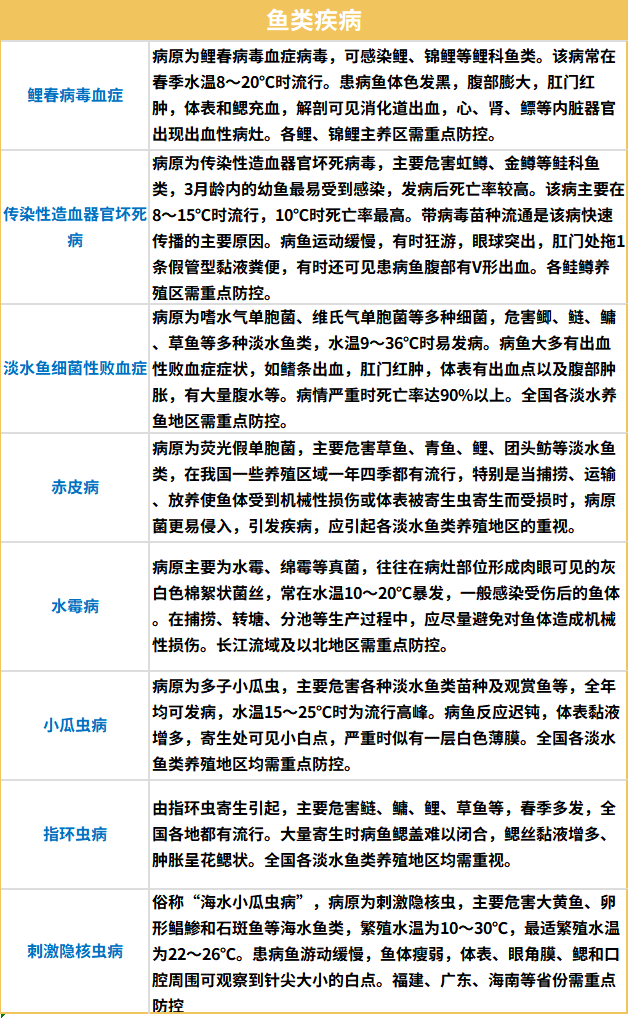
In April, the key issues to focus on in fish farming include Koi Herpesvirus Disease, Infectious Hematopoietic Necrosis Disease, Bacterial Septicemia in Freshwater Fish, White Spot Disease, Ichthyophthirius Multiviridis Disease, Stichophrysis Disease, Anchor Worm Disease, and Stylonychella Disease.
II. Crustacean Diseases
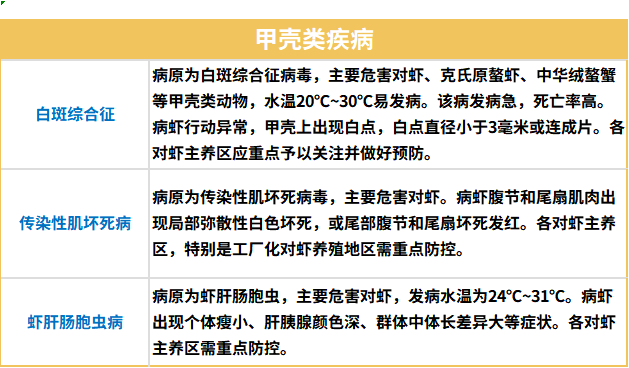
In April, the focus of shrimp farming should be on white spot syndrome, infectious myonecrosis disease, and shrimp hepatopancreatic cronic trematodiasis.
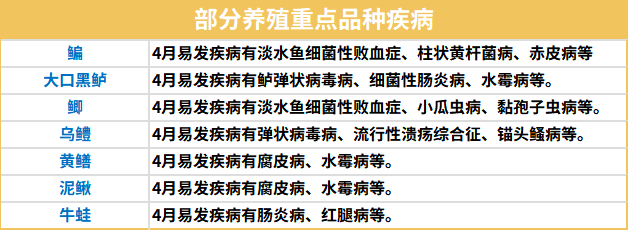
III. Diseases of Key Cultivated Species
IV. Key Points of Regionalized Prevention and Control
South China region: Guangdong, Guangxi and Hainan need to focus on preventing and controlling white spot syndrome in prawns and neuro-necrosis virus disease in grouper fish. In the arid areas of western Hainan, efforts should be made to enhance oxygen supply and water replacement management.
East China region: Jiangsu, Zhejiang, Anhui and Fujian need to pay attention to cyprinid hemorrhagic disease and bacterial septicemia in freshwater fish. For species such as "Guangtai 1" of South American white shrimp, enhanced quarantine of breeding stock is required.
Central China region: Hubei, Hunan, Jiangxi and Henan need to be vigilant against grass carp hemorrhagic disease and bigmouth bass frog iridovirus disease. In Henan and other areas, attention should be paid to the symptoms of "wintering syndrome" such as rotting body and rotting gills.
North China region: Hebei, Shandong, Shanxi and Shaanxi need to focus on preventing and controlling Koi herpesvirus disease and Largemouth bass encephalomyelitis. In Shanxi and Shaanxi regions, efforts should be made to strengthen the prevention of mycosis.
Southwest Region: Sichuan, Guizhou and Yunnan need to pay attention to grass carp hemorrhagic disease and bacterial ulcerative gill disease. In Guizhou and other areas, attention should be paid to the harm of salmonid encephalomyelitis virus to fingerlings.
Northwest Region: Gansu, Ningxia and Xinjiang need to strengthen disease prevention and control for varieties such as "Changhuai 1" of Chinese soft-shelled turtle. In the arid areas of the central and southern parts of Xinjiang, attention should be paid to bacterial white spot disease.
V. Comprehensive Control Recommendations
Stock management: Strict quarantine measures must be implemented. Select high-quality stock with no viruses and no pathogens. Before release, the stock should be soaked and disinfected in salt water or povidone-iodine solution.
Water quality regulation: Regularly change the water, with each change not exceeding one-third of the total water volume, and the temperature difference should not exceed 2℃; Turn on the aeration machine for 2 hours at noon on sunny days, and provide continuous aeration on rainy days; Use potassium bisulfate and other substrate improvement agents every 10 days, and combine with spore-forming bacteria and photosynthetic bacteria to regulate the balance of bacteria and algae.
Scientific feeding: Select fresh, mold-free feed. Follow the principles of "fixed time, fixed place, fixed quantity" to avoid overfeeding and resulting in leftover food contamination. Add vitamin C and multiple vitamins to the feed to enhance immunity.
Standardized medication: Strictly follow the "Aquaculture Drug Instruction Sheet (No. 1 and 2, 2025)" to scientifically use compliant drugs such as bromochlorhexidine powder and florfenicol. Prohibit the use of prohibited drugs and strictly enforce the withdrawal period.
Outbreak handling: Report the outbreak immediately upon discovery. Dispose of dead aquatic animals in accordance with the "Procedures for the Harmless Disposal of Dead Aquatic Animals and Aquatic Animal Products Affected by Diseases", and strictly prohibit random disposal.