The long and hot summer is gradually fading away. The temperature and water temperature in September are gradually dropping, which brings the best growth period for aquaculture. However, at the same time, the fish carrying capacity and feed amount in the aquaculture water body reach the peak of the year during this period, which is prone to induce various aquatic animal diseases.
To ensure the smooth progress of aquaculture, we need to predict possible diseases in advance and formulate effective prevention and control measures.
The following is a summary of common diseases of some fish, crustaceans and some key farmed species:
Fish diseases
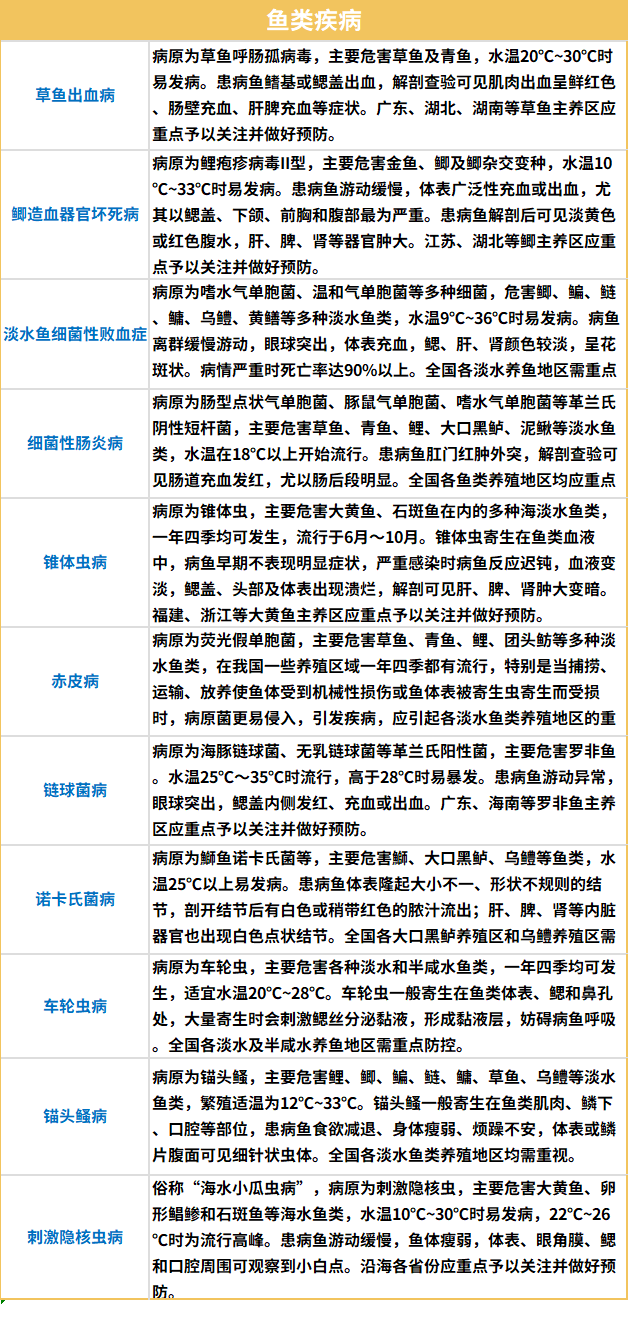
In September, fish farming should focus on grass carp hemorrhagic disease, crucian carp hematopoietic organ necrosis disease, bacterial sepsis in freshwater fish, bacterial enteritis disease, red skin disease, streptococcosis, nocardia disease, trichoplasmosis, anchor head 鳋 disease, cryptococcosis and trypanosomiasis.
Crustacean diseases
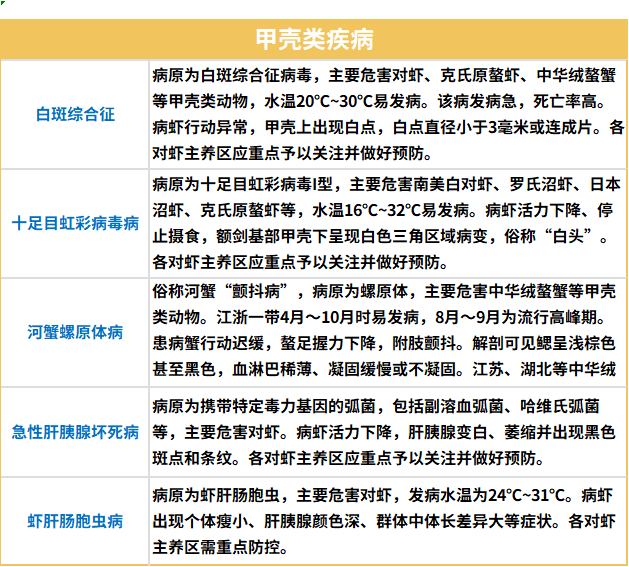
In September, crustacean farming should focus on white spot syndrome, Decapod iridovirus disease, acute hepatopancreatic necrosis disease, shrimp enterococcosis, and river crab snail plasma disease, etc.
Diseases of some key species in aquaculture
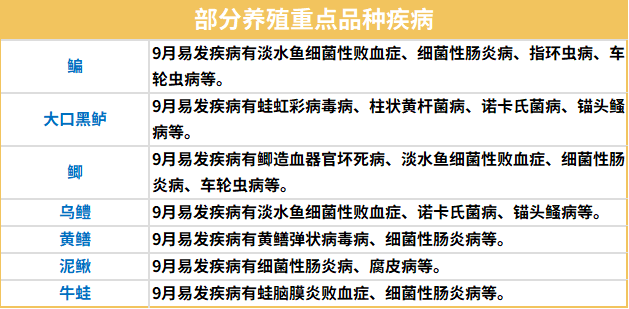
Prevention and control suggestions
Strengthen water quality management
Regularly monitor water quality indicators (such as pH, ammonia nitrogen, nitrite, dissolved oxygen, etc.), and change water in a timely manner or use microbial preparations to regulate water quality. Maintain water transparency and prevent excessive algae growth.
Scientific feeding
Adjust the feeding amount and frequency according to the changes in water temperature and the feeding situation of the farmed animals to avoid excessive feeding which may lead to deterioration of water quality. Vitamin C, probiotics and other substances can be added to the feed to enhance immunity.
Reduce stress
Try to avoid frequent operations (such as pulling nets and turning ponds) to prevent injuries to the farmed animals. Anti-stress drugs (such as immune polysaccharides, electrolytes, etc.) can be used to enhance resilience before sudden weather changes.
Disease monitoring and early prevention and treatment
Persist in daily pond patrols to observe the activities and feeding conditions of the farmed animals. If any abnormality is found, take samples for testing in a timely manner and consult the local aquatic product technology promotion department. The use of prohibited drugs is strictly prohibited. Choose compliant drugs for prevention and treatment.